
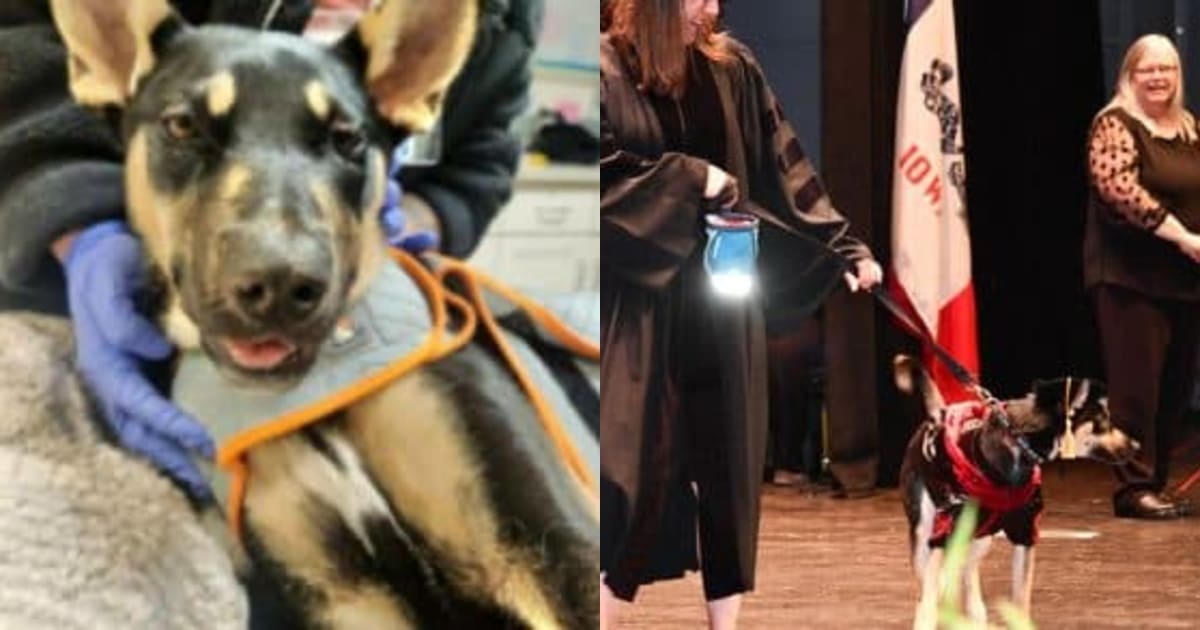

As the graduates of Iowa State University’s College of Veterinary Medicine assembled for their emotional commencement ceremony, little did they know that a miracle awaited them. Amidst the atmosphere of joy and celebration, a small rescue dog named Honey made an unexpected appearance, bringing the audience to tears.
Just months before this unforgettable moment, Honey had faced unimaginable odds. On Christmas Eve, she arrived at the veterinary hospital, a victim of a tragic car accident that left her with severe injuries. Multiple skull fractures, traumatic brain injuries, and significant damage had left her future hanging by a thread. Her foster mom, Laura Bradner, recounted the heartbreaking moment when Honey was surrendered by a homeless man who had desperately wanted to save her. He made the gut-wrenching decision to let her go, believing her only chance lay in the hands of the compassionate veterinary team.

Quickly, the dedicated team at Iowa State’s Lloyd Veterinary Medical Center sprang into action. Dr. Dan Grooms, dean of the college, recalled how the emergency responders worked tirelessly to stabilize Honey, battling against her critical condition. “They were fixing fractures and treating everything they possibly could,” he shared, emphasizing the grave concern for her brain trauma. In those intense moments, Honey ceased to be just another case; she became a beacon of hope and determination.
Honey’s journey to recovery required months filled with surgeries, extensive treatments, and relentless rehabilitation. Supported by the unwavering support of Critter Crusaders, a nonprofit organization dedicated to helping rescue animals, Honey’s case ignited a community spirit like no other. Founder Jan Erceg highlighted the collective effort that rallied around Honey’s plight. “We help guide the care and provide funding for these emergency situations,” she explained, noting how the fundraising efforts had surpassed $27,000 to support Honey’s treatment.
As weeks rolled into months, Honey attended rehab sessions five days a week. Each day, the frightened pup that had once fought for her life gained strength and began to trust again. “She has the sweetest disposition,” Bradner shared, highlighting Honey’s unbreakable spirit. Through every challenge, Honey remained gentle and loving, a true testament to resilience.
When the day of graduation arrived, the students who had dedicated their efforts during the long shifts couldn’t contain their emotions. Watching Honey confidently strut onto the stage, her tail wagging and eyes sparkling, was nothing short of miraculous. Many of these students had witnessed her darkest moments; now they were celebrating her triumph.
Dr. Grooms remarked on the significance of Honey’s presence. “It shows these graduates the difference they can make,” he said. Her story radiated hope, illustrating the profound impact veterinarians have—not only in healing animals but also in touching the lives of their caregivers.
As Honey basked in the warmth of the applause, the fear and pain she once endured faded into memory. In that embrace of love and joy, she was living proof that the odds could be defied. Bradner believes she has just a month of rehabilitation left before reaching another milestone in her recovery, and judging by the confidence in her step as she took the stage, one thing was clear: Honey knew she had not just survived; she had thrived.