
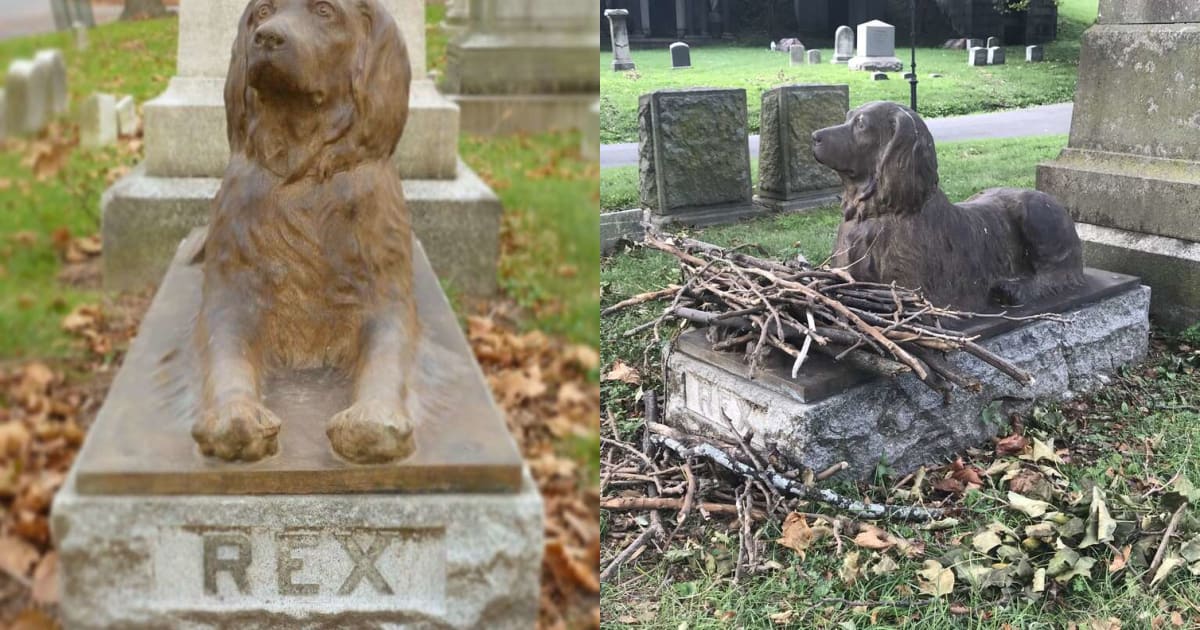

In the serene expanse of Green-Wood Cemetery, nestled in the heart of south Brooklyn, lies a treasure trove of history. This remarkable resting place is home to notable figures ranging from renowned artists to honorable generals. Yet, among these illustrious names, one humble grave has captured the hearts of passersby more than any other. It belongs to Rex, a devoted canine guardian forever etched in bronze, lying peacefully on a stone pedestal.
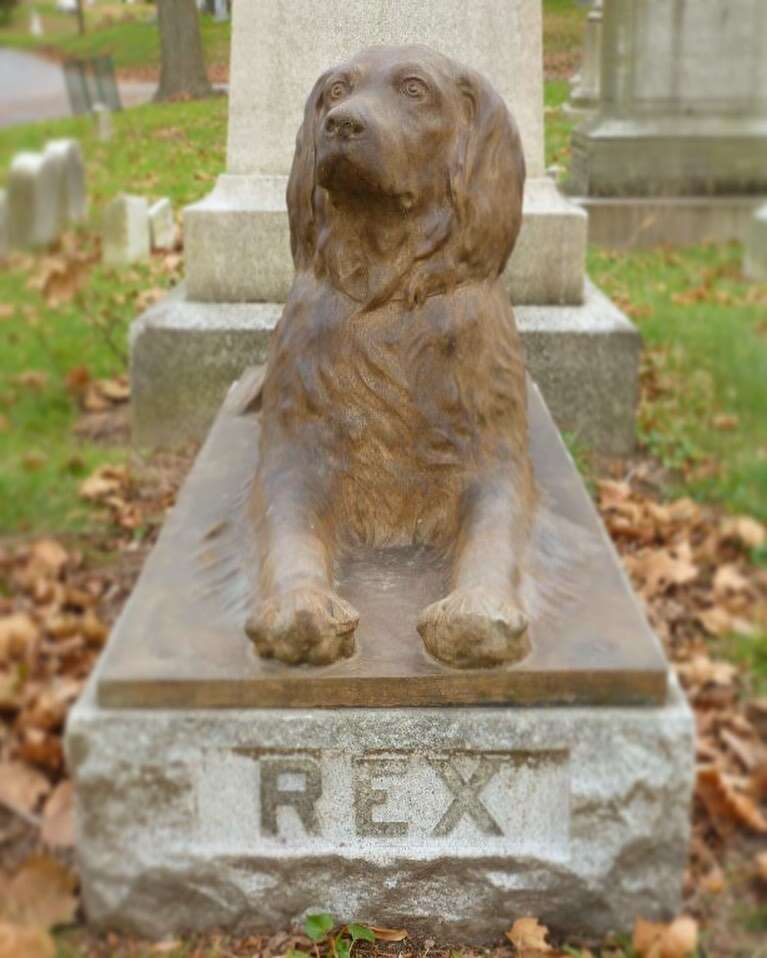
For over a century, Rex has watched over his beloved owner’s grave, a touching testament to loyalty and love that transcends time. His resting place, located just at the intersection of Sycamore and Greenbough Avenues, invites a stream of visitors who stop to pay their respects. Rex is no ordinary dog; he is believed to belong to John E. Stow, a cherished fruit merchant who passed away in 1884. His story is one of companionship and fidelity, forever resonating through the years.
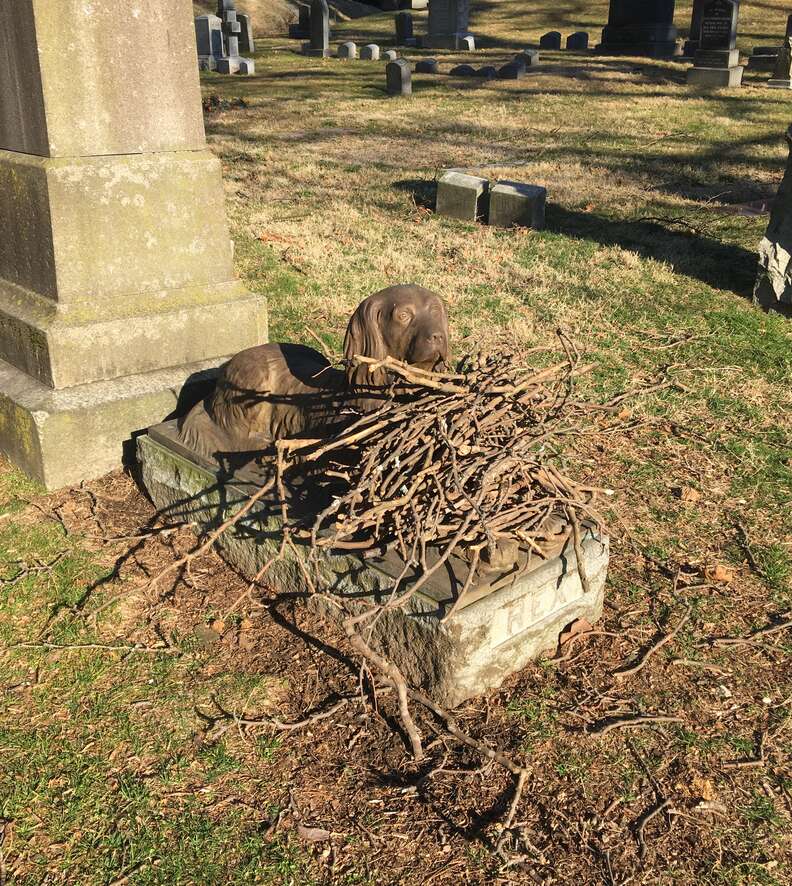
As visitors stroll through the cemetery, many are drawn to Rex’s statue, where an unexpected ritual has taken shape. Individuals honor his memory by gathering sticks and fallen branches, leaving them gently resting upon his outstretched paws. “When it comes to Rex, he obviously stands out,” shares Stacy Locke, the communications manager for Green-Wood Cemetery. “It’s right under a tree and there are lots of sticks around. People will drop a stick across his little paws.”
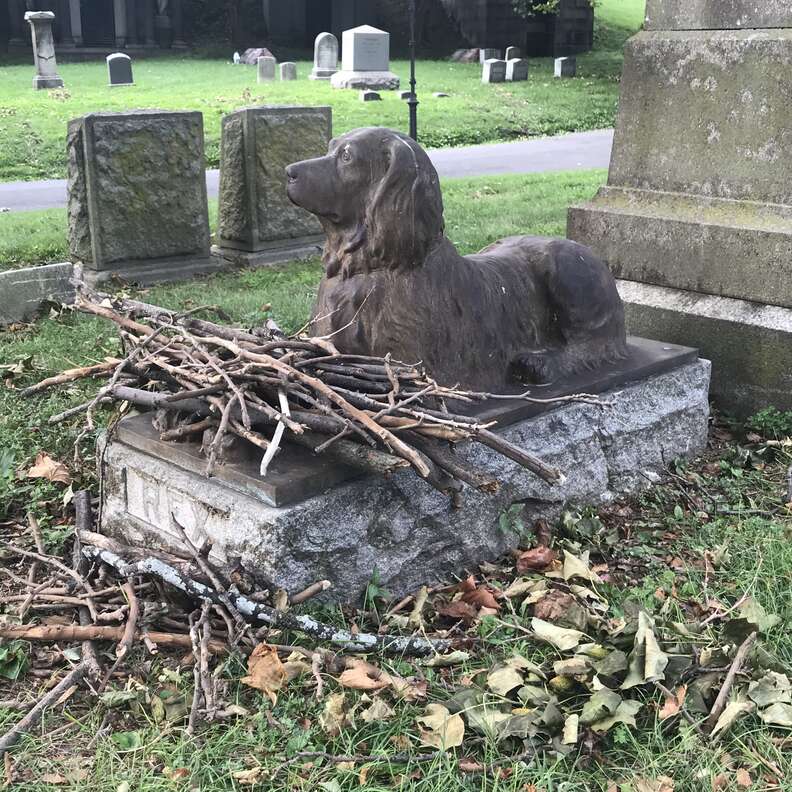
Some even leave tokens of love, like photographs of their own departed pets, as if to say, “Rex, look after my little one.” This beautiful interaction between Rex and the visitors reflects a profound bond that transcends death, reminding us all that a dog’s love is eternal.
Throughout the COVID-19 pandemic, Green-Wood has blossomed into a sanctuary for those seeking solace in nature. With the influx of visitors, Rex’s collection of sticks has flourished, symbolizing the connections forged amidst shared grief and nostalgia. His might not be the only grave with a compelling tale; several animals received the honor of being buried alongside their humans prior to the cemetery’s board of trustees prohibiting such burials in 1879. Another enchanting dog sculpture nearby shares a similar mystery, often adorned with toys left by those who visit.
The secret surrounding Rex’s own final resting place remains unsolved—archives from the 19th century hint at a ‘bronze likeness of a dog,’ but whether Rex lies interred beside his owner is a question cloaked in uncertainty. “People like to believe that there is a dog interred there, and there very well might be,” Locke adds with a sense of warmth.
Ultimately, Rex stands as a touching reminder that the love shared with a dog, no matter the passage of time, endures forever, bridging the gap between life and the serene silence of eternity.